
The most important Primary 4 composition skills to master
For composition writing at the Primary 4 level, most pupils read model compositions, memorise phrases and certain paragraphs , memorise different types of beginnings in order to score for the composition exam. However, most pupils fail to focus on the most important Primary 4 composition skills.
The main event (also known as the climax) is the real mark-scoring portion and one of the most important Primary 4 composition skills that pupils should master. This means most of the marks for the content section is based on the writing of the main event. This is also the part of the composition which most Primary 4 pupils struggle with as they have “no idea what to write” or how to properly expand the story.
Therefore, in order to master Primary 4 composition skills, knowing how to independently write a logical and sequential main event is the skill that pupils should master.Regular practice and guidance can significantly improve results, especially when students build strong Primary 4 English writing skills through guided practice early.
Many pupils struggle with this because they are unsure how to plan and expand the main event logically. In our Primary 4 English tuition programme, we guide pupils step by step on how to develop sequential thinking, expand key events and write content that meets exam requirements.
In a previous post , we used a Primary 4 composition topic “The day you helped someone” to illustrate the smart picture selection.
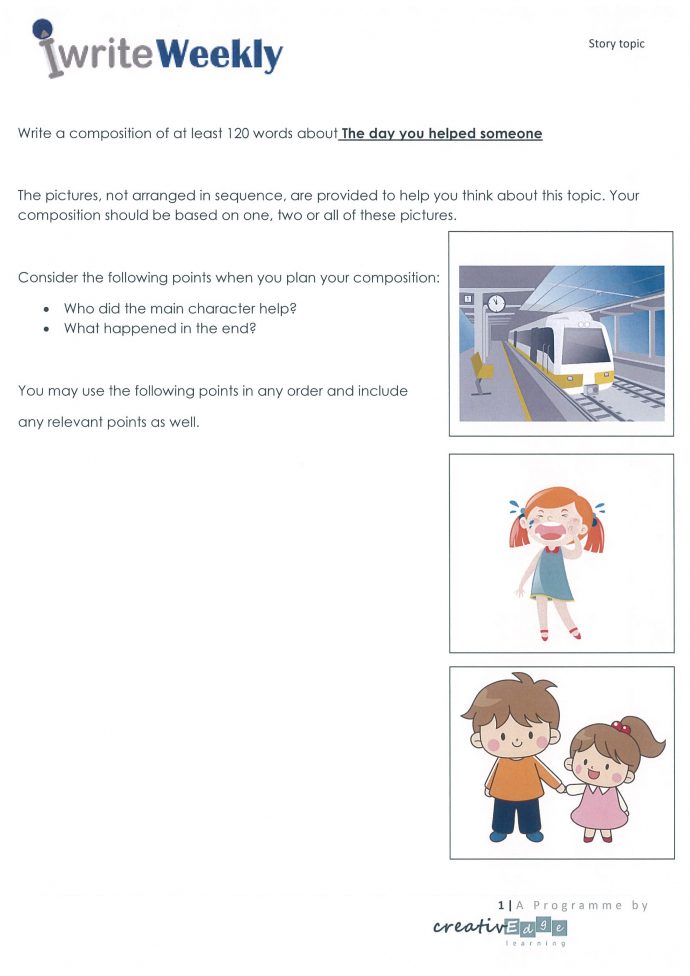
For this post , we will use the same topic and the most ideal conflict (as explained in the previous post) to illustrate how the main event can be written using sequential thinking skills.

Conflict 3
A girl was lost in the shopping centre.
The main event should begin with the main character’s first contact with the the girl.
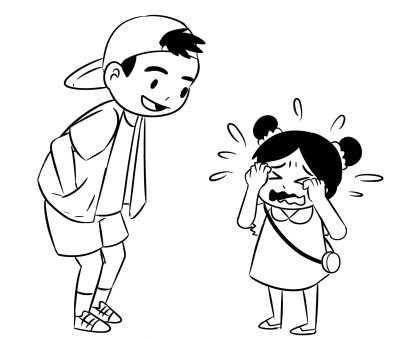
- What did you say to the girl?
Since the story is about how the main character helped the girl, it is natural to assume that he would be asking her a question, out of concern.
Main event (1)
I saw a younger girl who was alone and wailing. I asked her in a kindly tone , “Why are you crying?”
What happens next?
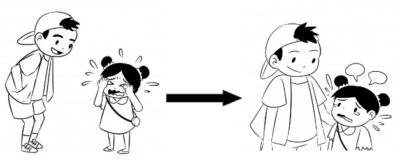
- What was the girl’s reaction?
It is natural to assume that if the main character asked a question, the girl would respond as the next action. For the content of her response, it is logical to assume that she would be telling him what was troubling her.
Main event (2)
I saw a younger girl who was alone and wailing. I asked her in a kindly tone , “Why are you crying?” With eyes downcast, she replied that she could not find her mother anywhere.
Language tip : Besides writing the actions, the character’s feelings should also be included for vivid writing.
What happens next?
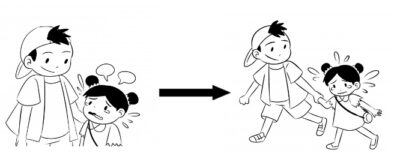
- What was your reaction to her problem?
Now that the girl has shared her problem, the main character should show his reaction. To write a composition according to the title, the appropriate reaction of the main character should be to help the girl.
Main event (3)
I saw a younger girl who was alone and wailing. I asked her in a kindly tone , “Why are you crying?”With eyes downcast, she replied that she could not find her mother anywhere. Without a second thought, I comforted her and said, “I will help you to find your mother.
This type of guided expansion is practised regularly during our Primary 4 English tuition classes, helping pupils understand how each action naturally leads to the next.
What happens next?

- What was your plan to help her find
her mother?
To find her mother, it is natural to assume that you would have to retrace her steps and hope that her mother was still in the area.
- How did you carry your plan?
After you found out where the girl was last at with her mother, you should be bringing her to the place to look for her mother.
Main event (4)
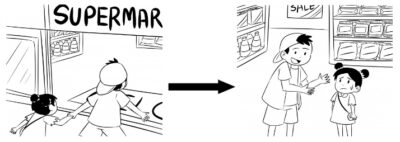
I saw a younger girl who was alone and wailing. I asked her in a kindly tone , “Why are you crying?”With eyes downcast, she replied that she could not find her mother anywhere. Without a second thought, I comforted her and said, “I will help you to find your mother. I asked her the last place she was at with her mother. She told me that they were at the supermarket so I brought her to there.
What happens next?
- How did you know what to look for at
the supermarket?
Since you did not know what her mother looked like, you would have to ask the girl.
Main event (5)
I saw a younger girl who was alone and wailing. I asked her in a kindly tone , “Why are you crying?”With eyes downcast, she replied that she could not find her mother anywhere. Without a second thought, I comforted her and said, “I will help you to find your mother.I asked her the last place she was at with her mother. She told me that they were at the supermarket so I brought her to there. When we reached the supermarket, I asked her what her mother looked like.
What happens next?

- What did you do to look for her mother
at the supermarket?
To search for her mother, it is logical that you would have to look hard at the shoppers for someone who looked like her mother.
- Did you find her mother there?
To ensure that you could help her as much as you can, her mother should not be found at this point. This will allow you to do more helping actions.
Main event (6)
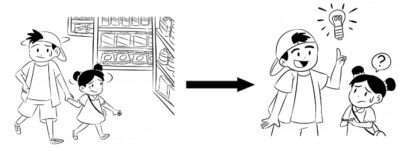
I saw a younger girl who was alone and wailing. I asked her in a kindly tone , “Why are you crying?”With eyes downcast, she replied that she could not find her mother anywhere. Without a second thought, I comforted her and said, “I will help you to find your mother.I asked her the last place she was at with her mother. She told me that they were at the supermarket so I brought her to there. When we reached the supermarket, I asked her what her mother looked like. With hopeful looks, both of us scanned the supermarket for her mother. However, her mother was nowhere in sight.
Language tip : A specific action verb like “scanned” can allow the reader to more clearly imagine the chain of events happening.
What happens next?
- What was your next idea to help her
then?
Since you could not find her mother, you could seek the help of the shopping centre’s staff.
Main event (7)
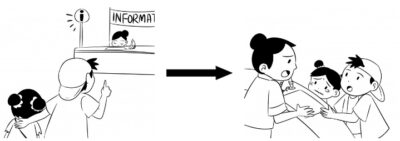
I saw a younger girl who was alone and wailing. I asked her in a kindly tone , “Why are you crying?”With eyes downcast, she replied that she could not find her mother anywhere. Without a second thought, I comforted her and said, “I will help you to find your mother.I asked her the last place she was at with her mother. She told me that they were at the supermarket so I brought her to there. When we reached the supermarket, I asked her what her mother looked like. With hopeful looks, both of us scanned the supermarket for her mother. However, her mother was nowhere in sight. I decided to bring her to the Information Counter.
What happens next?

- What did you say to her as you went to
the Information Counter?
It is natural that you would comfort her.
Main event (8)
I saw a younger girl who was alone and wailing. I asked her in a kindly tone , “Why are you crying?”With eyes downcast, she replied that she could not find her mother anywhere. Without a second thought, I comforted her and said, “I will help you to find your mother.I asked her the last place she was at with her mother. She told me that they were at the supermarket so I brought her to there. When we reached the supermarket, I asked her what her mother looked like. With hopeful looks, both of us scanned the supermarket for her mother. However, her mother was nowhere in sight. I decided to bring her to the Information Counter. “Don’t be sad. We’ll find your mother soon,” I comforted her.
What happens next?
- What did you say to the staff when you
were at the Information Counter?
For the staff to help, you would have to tell the staff what happened.
Complete main event
I saw a younger girl who was alone and wailing. I asked her in a kindly tone , “Why are you crying?”With eyes downcast, she replied that she could not find her mother anywhere. Without a second thought, I comforted her and said, “I will help you to find your mother.I asked her the last place she was at with her mother. She told me that they were at the supermarket so I brought her to there.
When we reached the supermarket, I asked her what her mother looked like. With hopeful looks, both of us scanned the supermarket for her mother. However, her mother was nowhere in sight. I decided to bring her to the Information Counter. “Don’t be sad. We’ll find your mother soon,” I comforted her. Upon reaching the Information Counter, I told the staff that the girl was lost. The staff swiftly made an announcement as I waited with the girl.
Writing tip : Always remember to break a lengthy main event into separate paragraphs
Mastering the writing of the main event is one of the most important Primary 4 composition skills and a key factor in scoring well for composition writing. These skills are systematically taught and reinforced in our Primary 4 English tuition programme, where pupils learn to write confidently using clear thinking and structured guidance.


So is the moral of the lesson that we should form sentences and add them up together??????
But nice tips!!!!!!!!