Introduction to Primary 3 English composition
Moving up from Primary 2, one will immediately notice that the Primary 3 English composition writing format is markedly different.
Today, we will talk about what the main rules are for the Primary 3 composition format and why it is important to take note of the rules.
Many parents notice that this is the stage where children start struggling with composition because the expectations increase significantly. A structured approach and regular guidance can make a big difference. In our Primary 3 English tuition programme, we focus on helping pupils understand composition formats, story structure and exam requirements clearly and confidently.
3 Key Rules
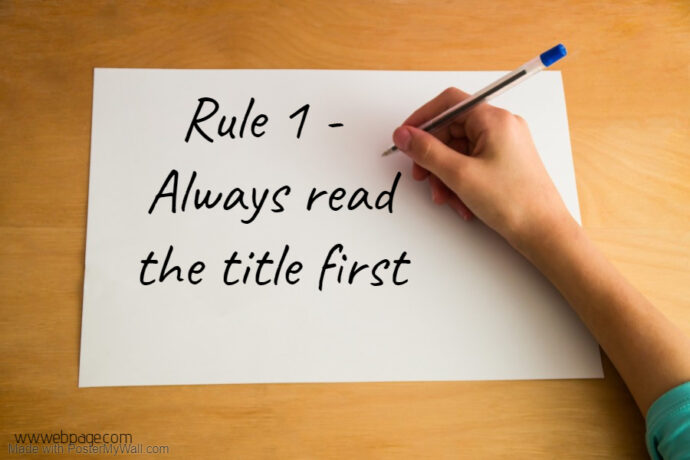
As this format is rather different from the 4-pictures writing format in Primary 2, many young writers often overlook the title.
However, the title is the most important part of the story as it states the main character of the story.
So the very first step is to read the title first.
Example 1
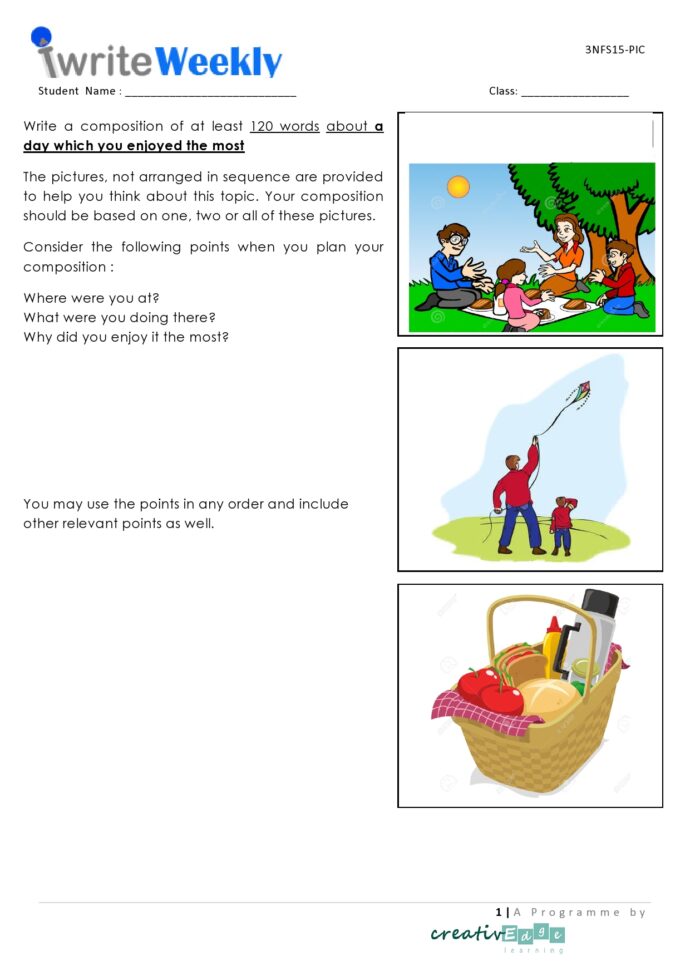
The main character must be “I” as the title states “you”.
Pupils should also note that by default, “I” should be a child in the story.
Example 2
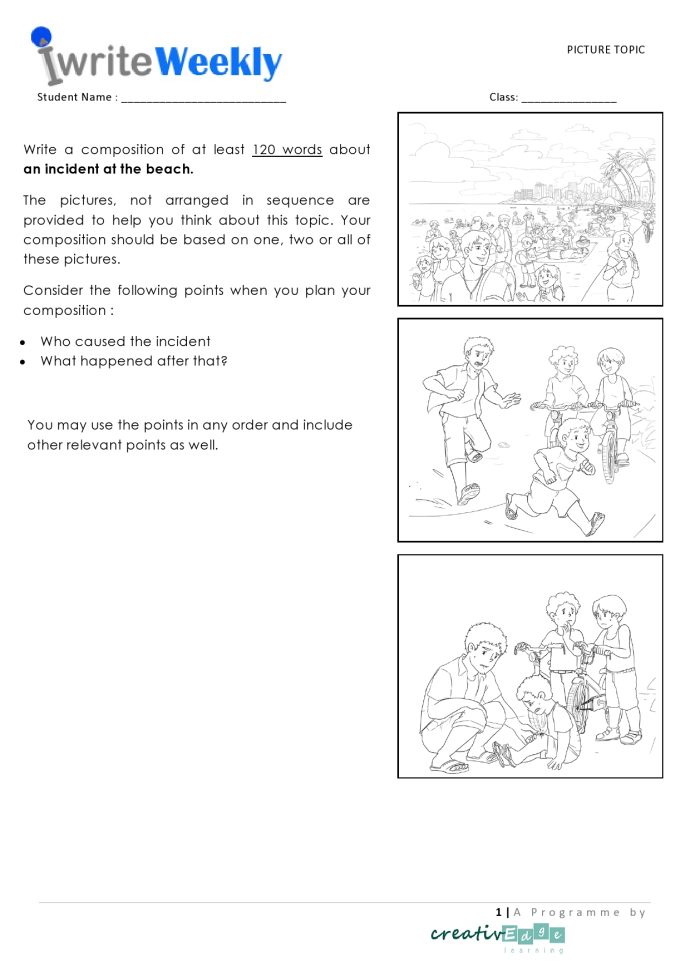
Since there is no “You” or “I” in the title, the following main characters are acceptable:
- The main character can be “I”
- The main character can be written from the third person perspective – “Tom” or “Jane”.
It is a must to write the main character as according to the title. This shows that the pupil understands what the story should be about.This is one of the key skills we repeatedly practise during our Primary 3 English tuition classes, as many pupils lose marks simply by misunderstanding the composition requirements.
Every story should have a conflict (main problem).
Although the three pictures do not look connected, pupils should fear not.
Often, one of the three pictures will either show the conflict or provide a clue to the conflict.
Example
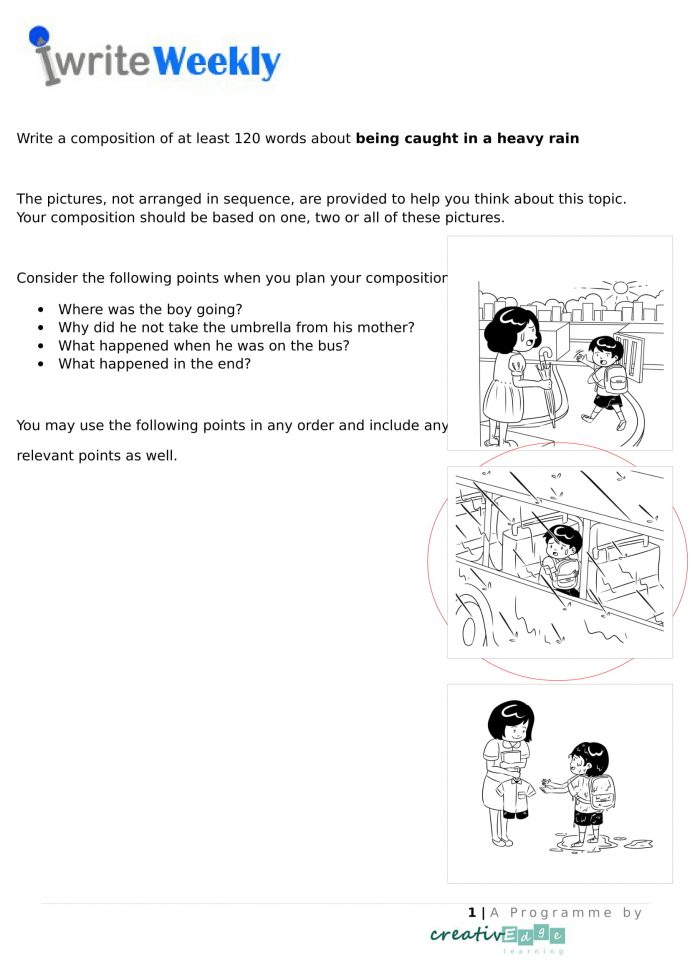
Picture 2 clearly shows the conflict of the story – the main character was caught in the the rain while on his way to school.

Primary 3 composition writing requires pupils to expand the story and create more content as compared to Primary 2 writing.
Young writers greatly benefit from a writing a structure.
The narrative story structure ensures that pupils write according to the appropriate structure and meaningfully expand the necessary parts of the story.
Writing well in Primary 3 requires more than just good ideas — pupils need clear structure, regular practice and guidance. If your child is struggling with composition writing or unsure how to develop their ideas, our Primary 3 English tuition programme provides targeted support to build strong writing foundations with confidence.


great
Is this online course