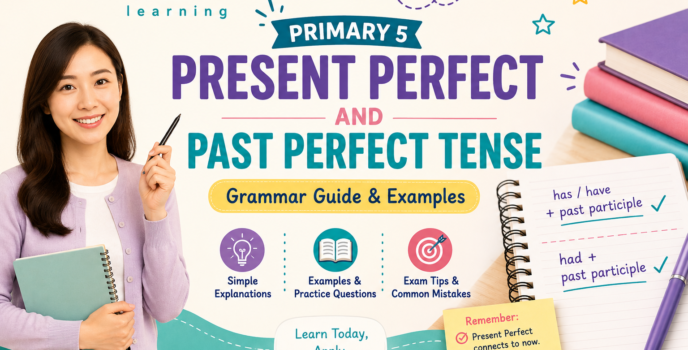
Understanding the Primary 5 Present Perfect and Past Perfect Tense is essential for success in English grammar examinations. Many Primary 5 pupils find these tenses confusing because both refer to actions in the past. However, each tense serves a different purpose and is frequently tested in school assessments and PSLE-style grammar questions. In this guide, …
Is your child losing marks in comprehension even though they “understand” the passage? This is one of the most frustrating problems for parents. The truth is, most students don’t lose marks because they can’t read — they lose marks because they don’t know how to answer. After working with hundreds of Primary 5 and 6 …
Avoid the common mistakes in the PSLE Primary 6 synthesis exam questions The PSLE Primary 6 synthesis exam is a key component of the English paper, requiring students to apply grammar rules accurately and consistently. While understanding synthesis rules is essential, recognising the common mistakes students make in the PSLE Primary 6 synthesis exam questions …
The PSLE Oral exam consists of two sections – Reading aloud and Stimulus-based conversation. In this post, we will share some tips on how to score in both sections. PSLE Oral exam section 1 – Reading Aloud (RA) For this segment, students are graded on fluency, pronunciation, and expression.These oral communication skills are gradually developed …
Why is it important to know the different ways to start a PSLE composition? For the PSLE exam, one of the basic requirements is to start a PSLE composition with a creative beginning. The purpose is to start the story off on the right foot by engaging the reader.These creative techniques are systematically taught and …
For Primary 5 and Primary 6, pupils learn the grammar rules for different sentence structures. This is to prepare for PSLE synthesis and transformation. One common type of sentence structure which routinely appears in PSLE synthesis and transformation questions is direct speech and reported speech. Students who need additional practice can also join our PSLE …