Prepositions may be short words, but they are important in every sentence. Primary 1 prepositions exercises teach children how people and objects are positioned, where an action takes place and whether something is moving from one place to another. Once a child learns to look at the action and the surrounding nouns, these questions become much easier to answer.
What Are Prepositions in Primary 1 English?
A preposition is a word that shows the relationship between a person, place or thing and another part of the sentence. At Primary 1, children usually meet prepositions of place and movement, including in, on, at, beside, under and into.
For example, in the sentence “The dog is under the table,” the word under tells us where the dog is. In “Mr Ong jumped into the pool,” the word into shows movement from outside the pool to the inside.
For a wider overview of lower-primary grammar topics, read our guide to the Primary 1 English grammar syllabus.
How to Answer Primary 1 Prepositions Exercises
Children should not choose an answer simply because it sounds familiar. Encourage them to use this three-step method:
- Read the whole sentence. Do not focus only on the word immediately before the blank.
- Underline the action word and the place or object. These clues usually reveal whether the sentence is about position, movement or a fixed expression.
- Put each possible answer into the sentence. Remove choices that do not match the meaning, then read the completed sentence aloud.
Eight Primary 1 Prepositions Examples Explained
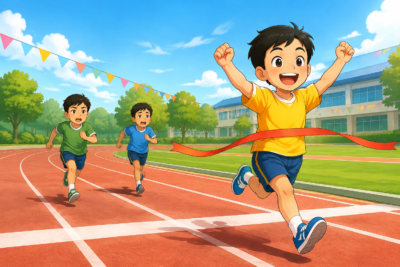
Example 1: Dan took part ___ a race and won first prize.
- in
- at
- on
- beside
Answer: in
Why: “Take part in” is a fixed expression. The words belong together, so “in” is the only suitable choice.
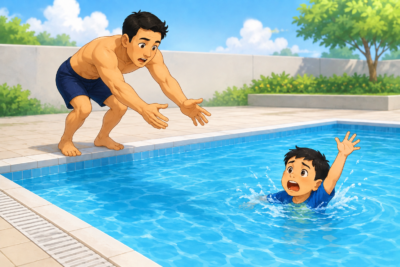
Example 2: Mr Ong jumped ___ the pool to save the drowning child.
- into
- in
- on
- for
Answer: into
Why: The action begins outside the pool and ends inside it. “Into” shows movement towards the inside of a place.
The common mistake is to choose “in” as the answer. Note that this preposition is not as clear as “inside”.
Example 3: The pigeons are sitting ___ the branch of the tree.

- in
- at
- on
- by
Answer: on
Why: The pigeons are resting on the surface of the branch. We use “on” when something touches or is supported by a surface.
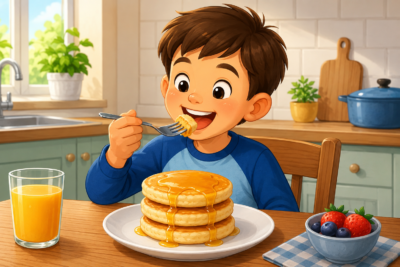
Example 4: Harry ate some pancakes ___ honey.
- with
- at
- on
- to
Answer: with
Why: He ate the pancakes together with honey.
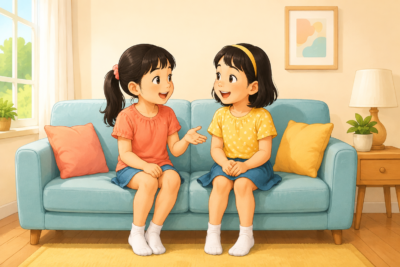
Example 5: The girls sat ___ each other on the sofa and chatted happily.
- between
- beside
- on
- to
Answer: beside
Why: “Beside” means next to. The girls were sitting next to one another.
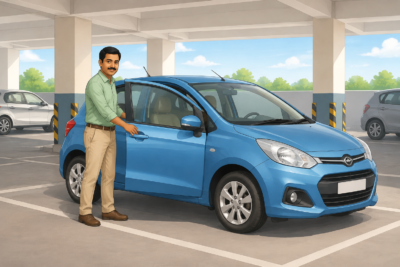
Example 6: Mr Ravi parked his car ___ the car park.
- with
- at
- on
- to
Answer: at
Why: “At” points to a general location. It tells us where Mr Ravi parked without describing an exact position within the car park.
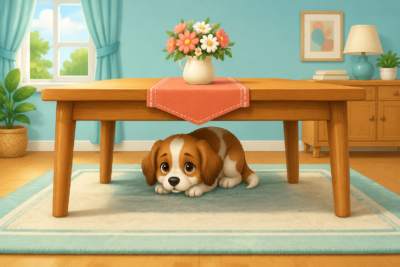
Example 7: Danny’s dog is hiding ___ the table.
- under
- beside
- in
- at
Answer: under
Why: The dog is below the table, so “under” describes its position.
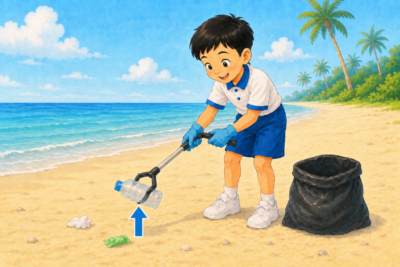
Example 8: Tim went to the beach to pick ___ litter.
- on
- up
- at
- to
Answer: up
Why: “Pick up” means to lift or collect something. Here, “up” forms part of the phrasal verb “pick up”. It is not describing the position of the litter, but children may still meet this structure in a grammar exercise alongside prepositions.
Common Preposition Mistakes to Watch For
- in and into: “In” usually describes position, while “into” shows movement: “The boy is in the room” but “The boy ran into the room.”
- on and above: “On” usually includes contact with a surface. Something can be above an object without touching it.
- beside and between: “Beside” means next to one person or thing. “Between” is normally used when someone or something is in the middle of two people or things.
- at and in: “At” often names a general point or location, while “in” means inside an enclosed place. The intended answer also depends on the options and the sentence context.
Easy Ways to Practise Prepositions at Home
Young children understand grammar more easily when they can see and act out the meaning. Try these short activities for five to ten minutes at a time:
- Place a toy on, under, beside and inside a box, then ask your child to describe its position.
- Give movement instructions such as “Put the pencil into the case” or “Place the book on the table.”
- Look at a picture together and ask, “Where is the cat?” or “Where are the children sitting?”
- Create two-choice questions, such as “The bird is on/under the branch,”
Why Prepositions Matter Beyond Grammar Worksheets
Prepositions are not only tested in multiple-choice grammar questions. Children need them to give clear oral answers, understand instructions and write complete sentences. Compare “The cat hid” with “The frightened cat hid under the dining table.” The second sentence tells the reader exactly where the action happened and creates a clearer picture.
Regular practice also prepares children for Primary 2, when they begin applying grammar in longer sentences and picture compositions. The aim is not to memorise a list of words, but to understand the relationships those words express.
Frequently Asked Questions About Primary 1 Prepositions
Which prepositions should a Primary 1 child know?
Common words include in, on, at, by, beside, between, under, over and into. Children should learn both the meanings of these words and how they work in complete sentences.
What is the easiest way to teach prepositions?
Use real objects and simple instructions. Moving a toy under a chair or into a box makes an abstract grammar word visible and memorable.
Why does my child keep mixing up “in” and “into”?
The difference is movement. “In” tells us where something is, while “into” shows that it moves from outside to inside.
How often should my child practise?
Short, regular practice is best. Five to ten minutes several times a week is usually more useful than completing many questions at once.
Build a Strong Primary 1 English Foundation
Well-designed Primary 1 prepositions exercises help children connect grammar rules with meaning. At CreativEdge Learning, our Primary 1 English tuition programme develops grammar, vocabulary, comprehension and sentence-writing skills through clear explanations and guided practice.
As your child progresses, our Primary 2 English tuition programme builds on these foundations with more challenging language work and picture composition. Families can also explore our Primary English holiday programmes for focused practice during the school holidays.


